Well… We Made It.
Wow.
I honestly cannot believe I am writing my final blog post on the last day in Peru. It feels like just yesterday I was nervously packing my suitcase, wondering what these next two weeks would have in store. Since then, I have explored Lima, the Amazon rainforest, the Sacred Valley, and Cusco. I have learned about sustainability, environmental law, ethical business practices, Indigenous culture, and international leadership. I have visited corporations, nonprofits, family-owned businesses, and artisan cooperatives. I have ziplined and canopy-walked through the Amazon, planted flowers before a Pachamanca feast, wandered through ancient Incan ruins, made chocolate from scratch, and met some of the kindest people I have ever encountered.
When I boarded my first flight to Peru, I thought I was coming here to learn about sustainability and international business.
I was right.
But I never expected Peru to teach me so much about myself.
Cusco: A City Built on Layers
Of all the places we visited, Cusco may have fascinated me the most. Walking through Koricancha, Sacsayhuamán, and the cathedral built on top of Incan foundations made history feel alive in a way I had never experienced before.
What stood out to me most was how each civilization literally built upon the one before it. The Spanish conquest permanently changed Peru’s landscape, yet despite centuries of change, Incan culture continues to thrive. You can still see it in the language, traditions, festivals, artwork, textiles, and the pride people have in their heritage.
Today, tourism and business have become another layer of Cusco’s story. Every day, thousands of visitors travel here to experience this incredible city, creating opportunities for local businesses and families. However, with those opportunities comes responsibility. Businesses operating within a UNESCO World Heritage Site have both legal and ethical obligations to protect the integrity of these places. Beyond complying with preservation laws, they should respect local traditions, invest in surrounding communities, and ensure that tourism enhances rather than commercializes the culture that makes Cusco so special. The best businesses aren’t simply located in Cusco—they become partners in preserving its future.
Businesses That Preserve Culture
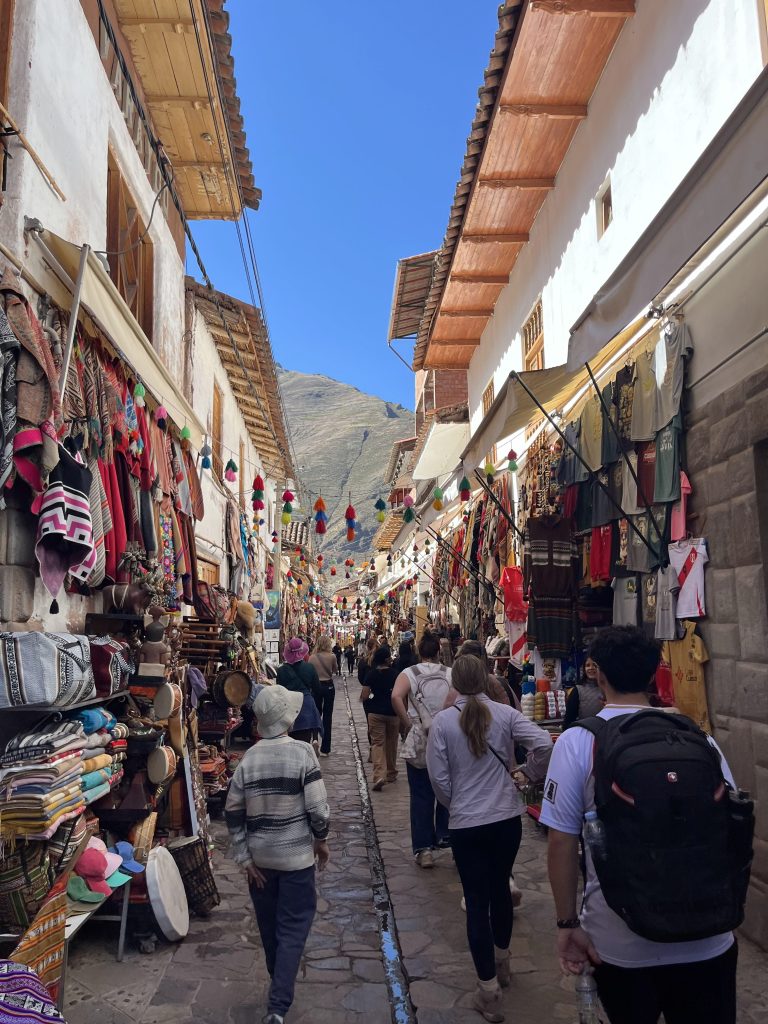
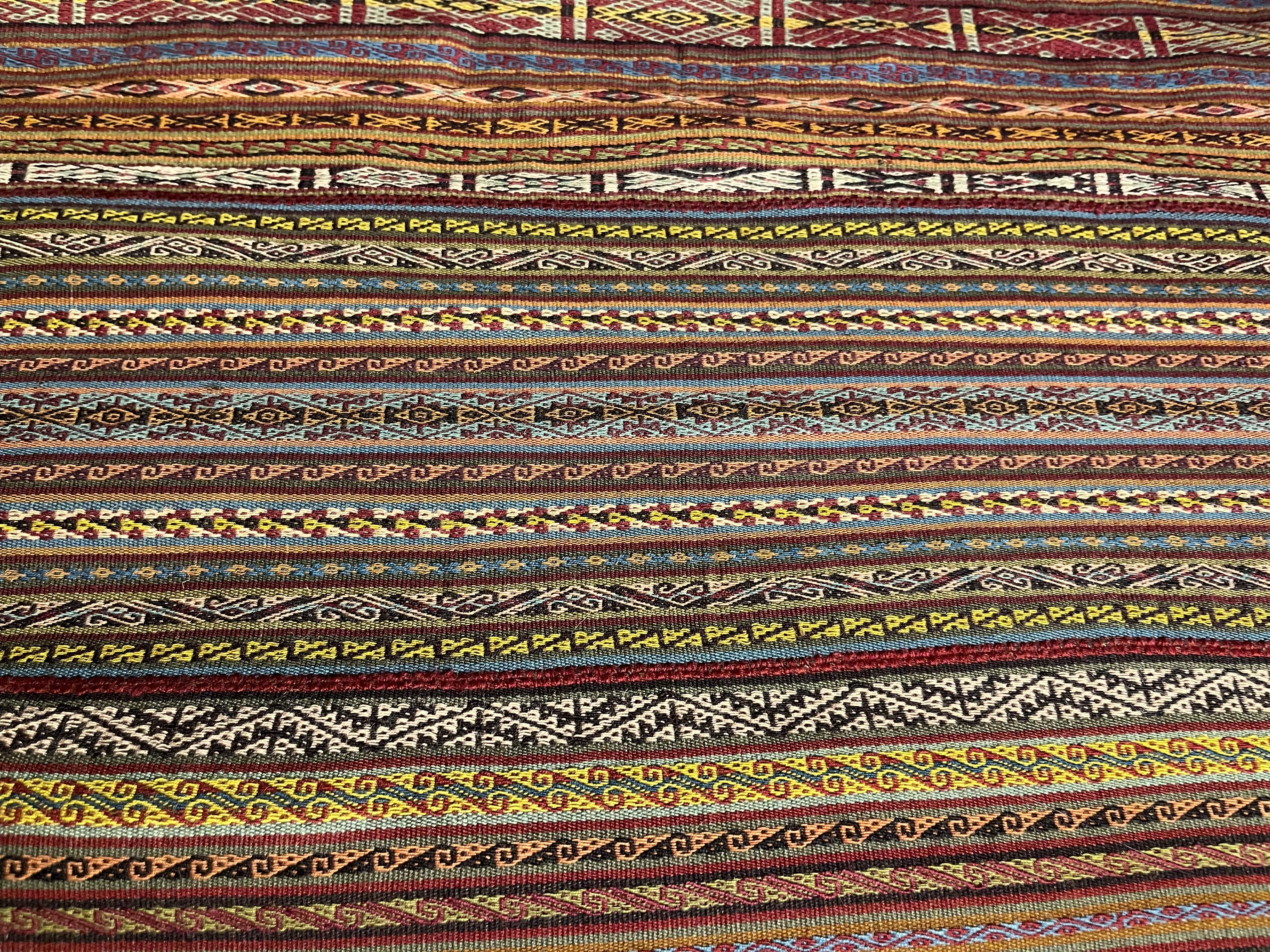
Some of my favorite corporate visits throughout the entire program were Awamaki and the Centro de Textiles Tradicionales del Cusco. They both shared one thing in common: people came before profits.
I admired how committed they are to ensuring that women weavers are fairly compensated for their incredible craftsmanship. Rather than accepting wholesale contracts that demand large quantities at extremely low prices, they choose to protect the value of the artisans’ work. I found that incredibly admirable because it allows traditional weaving to remain both culturally meaningful and economically sustainable.
Watching the weaving demonstrations made me appreciate just how much skill, patience, and history go into every single piece. These aren’t just beautiful textiles, they are stories passed from one generation to the next. Organizations like these aren’t simply selling products; they are preserving centuries of tradition while creating economic opportunities for women and their families. To me, that is what authentic corporate social responsibility looks like.
More Than Just Alpacas
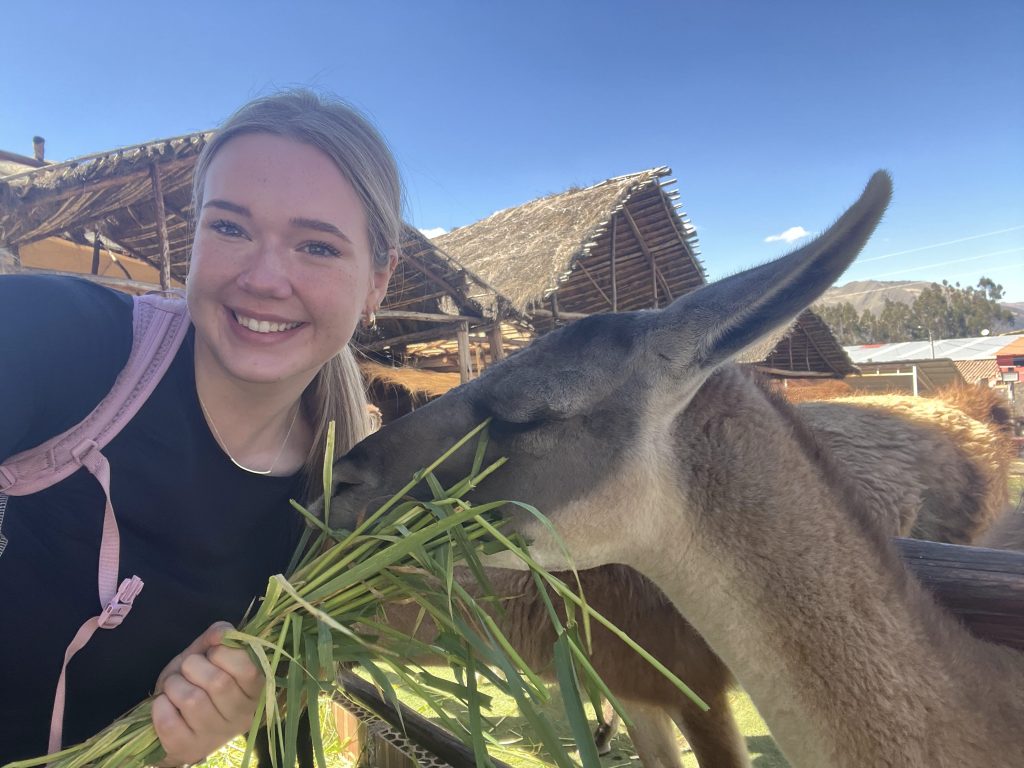
I also absolutely loved visiting Manos de la Comunidad. Getting to see alpacas, llamas, vicuñas, and guanacos up close was so much fun and one of the highlights of my trip. But what made the experience even more meaningful was learning how closely these animals are connected to Peru’s history and economy. Seeing where the fibers come from and understanding the craftsmanship behind the finished textiles made me appreciate everything we had learned throughout the trip even more.
This visit reinforced that preserving culture isn’t only about protecting historical sites; it is also about protecting traditional ways of life and ensuring the people who carry on those traditions are valued and supported.
A New Perspective on Tourism
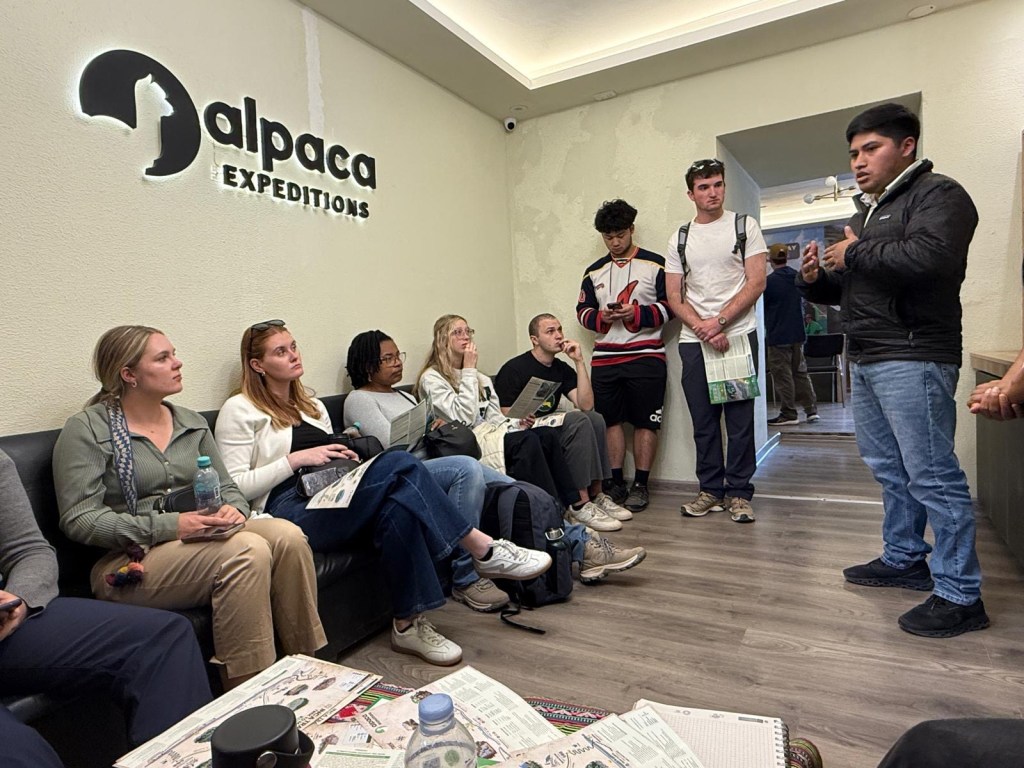
One visit that honestly surprised me was Alpaca Expeditions.
Going into the presentation, I expected to learn about hiking trails. Instead, I learned how a locally owned tourism company can create meaningful change within its community.
I was especially impressed by how Alpaca Expeditions invests in its porters, guides, and surrounding communities. Rather than viewing sustainability as just an environmental issue, they recognize that supporting employees, providing educational opportunities, and giving back locally are all essential parts of responsible business.
And I have to admit… before coming to Peru, if someone had suggested hiking to Machu Picchu, I probably would’ve thought they were crazy.
Now?
I honestly think I could handle the two-day, one-night hike.
The Four-day and five-day treks? Let’s not get too carried away. Those might still be a little beyond me LOL!!
Bean to Bar
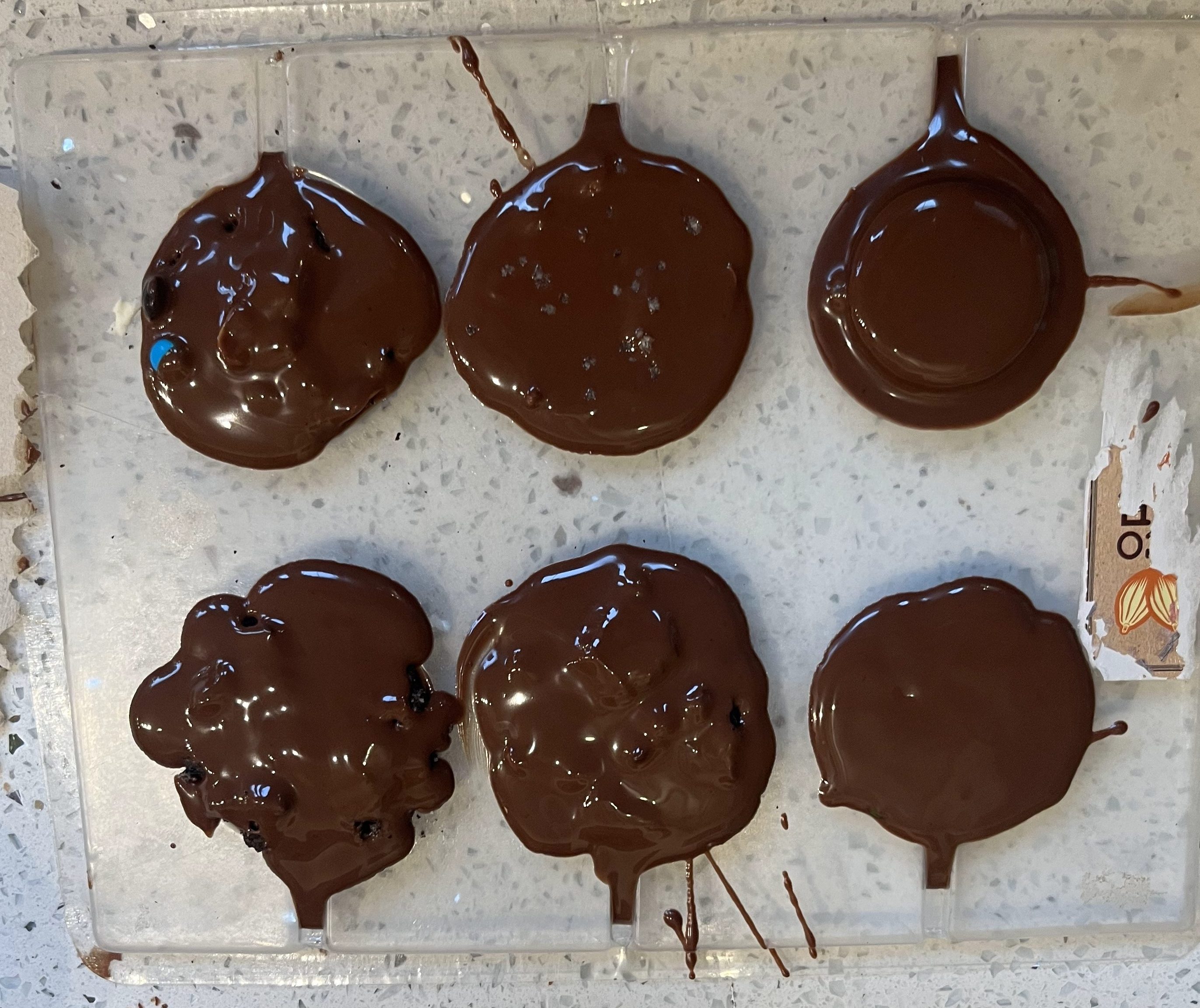
Another unexpected favorite was our workshop at ChocoMuseo.
I absolutely loved making chocolate from bean to bar. It was so much fun getting to roast, grind, mix, and create our own chocolate while learning about the journey cacao takes before becoming something we buy at a store.
Before this experience, I honestly never thought much about everything that happens before a chocolate bar reaches consumers. Every ingredient, every step in production, and every person involved along the supply chain plays an important role. It reminded me that businesses have responsibilities that extend far beyond the finished product. Behind every item we purchase are farmers, workers, families, and communities whose livelihoods depend on ethical business decisions.
And… getting to eat the chocolate we made definitely didn’t hurt either.
Local Businesses vs. Global Corporations
Looking back, I found it really interesting to compare these smaller, community-centered organizations with some of the larger corporations we visited earlier in the program, such as KPA Recycling, DP World, and Peru Sostenible.
The multinational organizations have the resources to create large-scale environmental initiatives that can impact thousands of people. Their work in recycling, sustainable infrastructure, and corporate reporting demonstrated how large companies can influence entire industries.
However, the local organizations often felt much more personal because we could immediately see the people benefiting from their work. Whether it was watching women weave traditional textiles or hearing about Alpaca Expeditions’ support for local porters, the impact felt tangible.
Neither approach is necessarily better than the other. Instead, I realized that meaningful corporate social responsibility can exist at every level. The organizations that impressed me most weren’t necessarily the biggest—they were the ones whose actions consistently reflected their values.
Looking Back on Everything
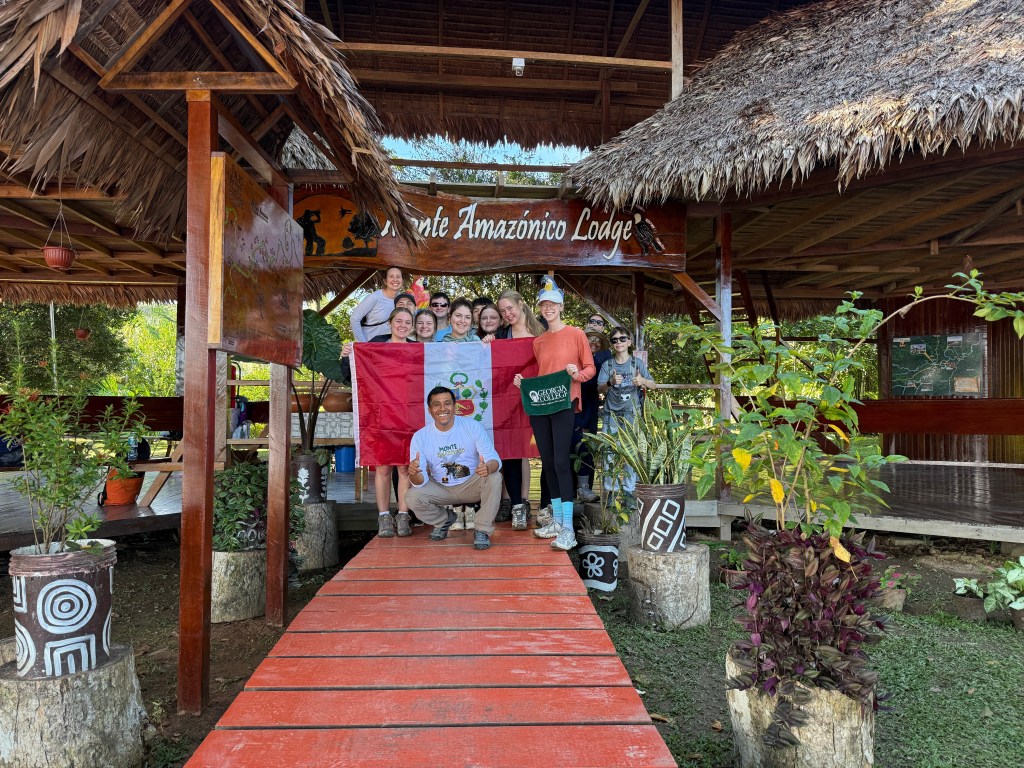
When I think about everything we experienced throughout these two weeks, from KPA Recycling and DP World to Peru Sostenible, the Amazon rainforest, Lake Sandoval, the canopy walk, Pachamanca, Awamaki, Alpaca Expeditions, ChocoMuseo, the Centro de Textiles, and the incredible history of Cusco, I keep coming back to one central theme.
Sustainability is about people just as much as it is about the environment.
Every organization approached sustainability differently, yet the most impactful experiences all shared one thing in common: community.
Whether it was empowering women artisans, protecting biodiversity in the Amazon, investing in local employees, preserving Indigenous traditions, or creating economic opportunities through tourism, the strongest organizations understood that long-term success depends on taking care of both people and the places they call home.
I also saw firsthand that there is still a gap between aspiration and reality. Throughout this course, we discussed how companies often make ambitious sustainability commitments, but following through requires accountability, transparency, and consistent action. The organizations that impressed me most weren’t necessarily the ones making the biggest promises; they were the ones quietly living out their values every single day.
The Biggest Lesson Peru Taught Me
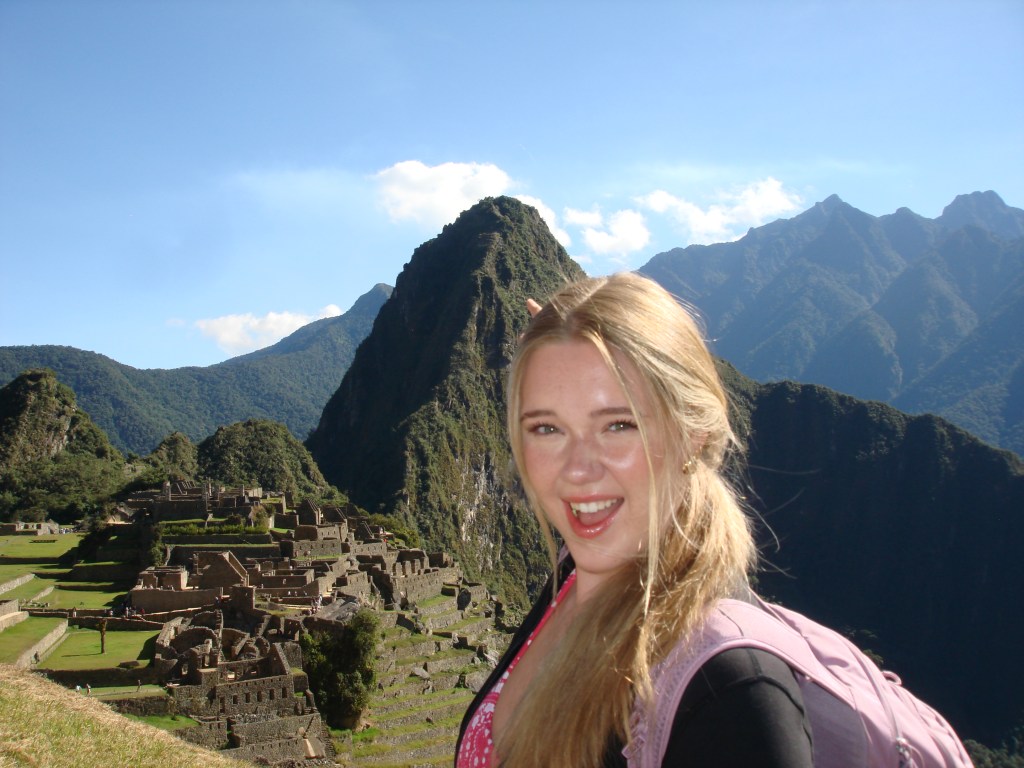
If you had asked me six months ago whether I thought I could spend two weeks in Peru without my family, I honestly would’ve laughed.
Last Spring Semester and Summer, I experienced some of the worst anxiety I have ever had. It became so debilitating that I struggled to sit through classes, take exams, and even drive. I worked incredibly hard to get myself back to where I wanted to be, but before this trip, I was still nervous. I wasn’t sure how I would handle being so far from home.
And now… here I am.
Not only did I travel to South America without my family, but over the past two weeks, I took five flights, rode boats, trains, and countless buses, and explored places I never imagined I would visit. Going into this trip, I truly didn’t think I could do all of that without constant worry or needing anxiety medication.
Instead, I discovered something I never expected.
I felt free.
Were there difficult moments? Absolutely. This trip didn’t magically eliminate my anxiety. But it taught me something far more valuable: I am capable of doing hard things despite it.
Every challenge I faced made me stronger. Every new experience gave me more confidence. Every time I stepped outside my comfort zone, I proved something to myself.
That may be the greatest lesson Peru gave me.
One day, I hope to own my own company. Good leadership requires confidence, adaptability, empathy, and trust—not only in the people around you, but also in yourself. This trip showed me that I am capable of so much more than I ever gave myself credit for. Sometimes growth isn’t about eliminating fear; it’s about choosing to move forward anyway.
As I leave Peru, I am bringing home unforgettable memories, lifelong friendships, and a much deeper understanding of sustainability, ethical leadership, and global business.
But more importantly… I am bringing home a new belief in myself.
Thank you, Peru, for giving me so much more than an education. You gave me confidence I didn’t know I had.


Leave a Reply